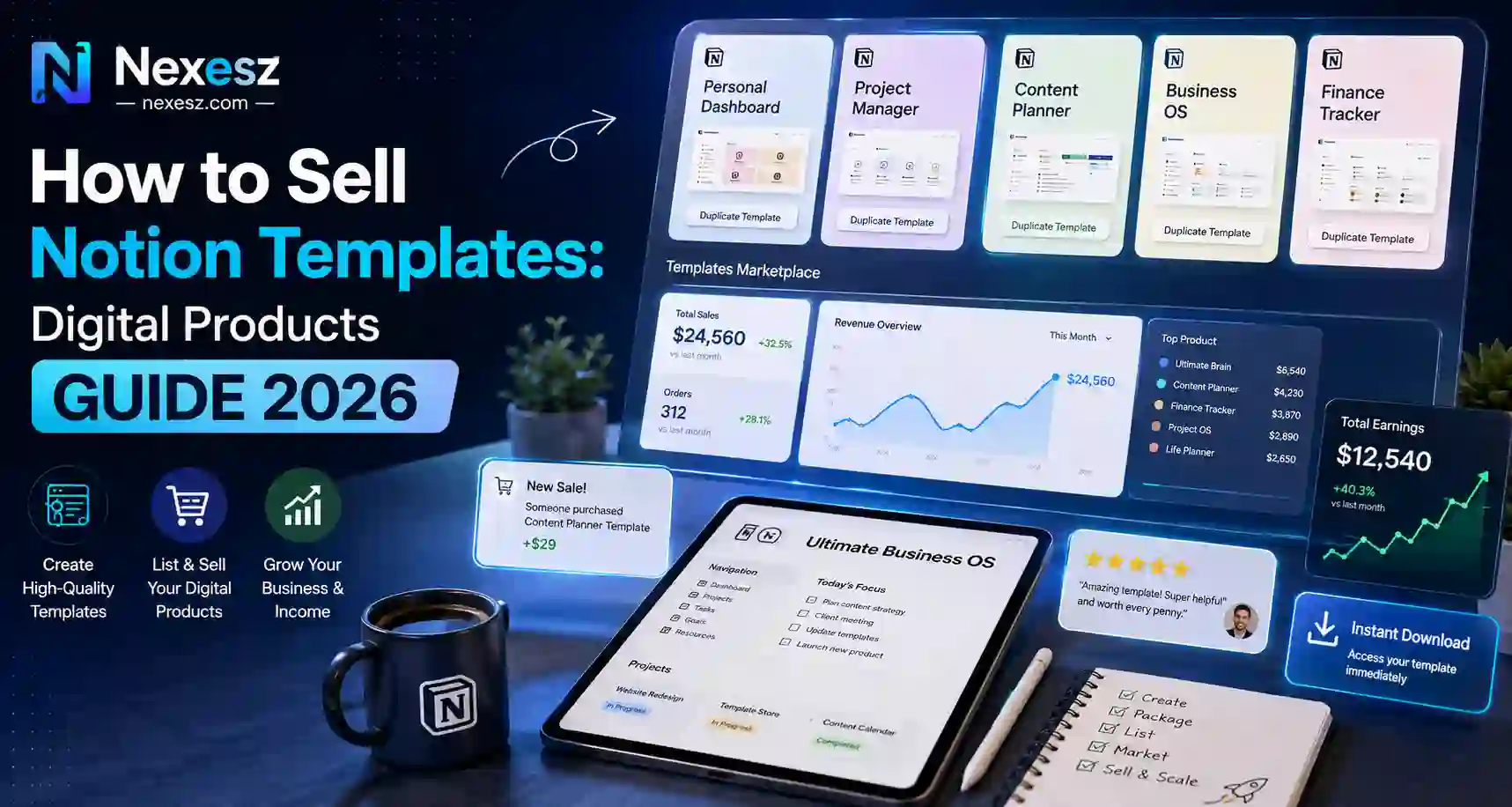
Learning how to sell Notion templates is one of the most accessible ways to enter this space right now, since Notion now has a built-in marketplace that connects creators directly to buyers. This guide walks through the full process, using Notion templates as the main example throughout.
Everything here applies whether you’re starting from zero followers or already have a small following you haven’t monetized yet.
None of this requires design skills, a business background, or upfront money to get started. A regular Notion account and a genuine understanding of one problem worth solving are enough.
Why Digital Products Are Still a Smart Bet in 2026
Digital products scale in a way physical products can’t. Once a template, guide, or course is built, selling the hundredth copy costs the same as selling the first.
Buyer behavior has also shifted. People are far more comfortable paying for a well-made digital tool today than they were even a few years ago, especially for things that save time or reduce mental clutter.
The barrier to publishing has dropped too. Marketplaces now handle payments, delivery, and even basic marketing, so a creator can focus entirely on building something useful rather than on the technical side of selling it.
Competition has grown alongside this, but so has the market itself. More buyers are searching for solutions to specific problems than there were two years ago, leaving room for well-made, narrowly focused products.
How to Create a Digital Product People Will Buy
Creating a digital product should start with a problem, not with the format. Before building a template, ebook, spreadsheet, course, or guide, identify a problem people already struggle with and consider how your product can make it easier to solve.
Start by choosing one specific audience and one clear problem. A product designed for freelance writers, for example, can focus on proposal tracking, content planning, client management, or invoicing rather than trying to solve every business problem at once.
Research similar products and look at how they are presented, what features they include, and what customers appear to value. This can help you find opportunities to make your product easier to use, more focused, or more practical.
Create a simple first version instead of spending too much time trying to make everything perfect. Test the product yourself and make sure the instructions are clear, the layout is easy to understand, and the buyer can achieve the result the product promises.
Before publishing, prepare a clear product title, useful description, screenshots or previews, pricing information, and simple instructions for accessing the product. The goal is to make the value obvious before someone decides to buy.
How to Promote a Digital Product After Launch
Creating a useful product is only the first step. You also need a simple promotion strategy to help potential buyers discover it.
Start by creating content around the problem your product solves. Blog posts, tutorials, short videos, social media posts, and educational guides can introduce people to the problem and naturally lead them toward your product.
You can also use marketplaces to reach people who are already searching for digital products. Improve your product listing with a clear title, relevant keywords, useful screenshots, and a description that explains exactly what buyers will receive.
Customer feedback can also help improve future promotion. Pay attention to the questions people ask, the features they value, and the reasons they hesitate before buying. Use those insights to improve your listing and future products.
As your product catalog grows, connect related products together. Someone interested in one template or guide may also need another product that solves the next part of the same problem. This can increase the value of each customer without requiring you to create a completely new audience for every product.
Selling Without an Existing Audience
Not having an audience feels like the biggest obstacle, but marketplaces exist specifically to solve this problem. Figuring out how to make and sell a product without followers means leaning on platforms that already have their own traffic.
Etsy, Gumroad, and niche marketplaces built around specific tools all bring in buyers actively searching for exactly what you’re selling. Your first sales come from their search traffic, not from an audience you’ve built yourself.
Once you have a handful of sales and reviews, that social proof does a lot of the selling for you going forward. Early reviews matter more than early follower counts.
This is exactly why so many people learning how to sell Notion templates skip building an audience first and go straight to listing on a marketplace instead — the platform’s existing traffic replaces the need for one entirely.
Choosing the Right Marketplace for Your Product

Not every platform fits every product, and picking the wrong one can quietly cap your sales before you even notice. Knowing how to choose the right marketplace for your business starts with matching the platform to your specific product type.
General marketplaces like Etsy and Gumroad work well for a wide range of digital products and bring built-in shopper traffic. Niche marketplaces, like Notion’s own Marketplace or template-specific sites, bring a smaller but far more targeted audience already looking for exactly what you sell.
There’s no single right answer here — the decision depends entirely on what you’re selling and who’s already shopping on each platform.
Compare fees carefully before committing. Listing fees, transaction fees, and payment processing costs can compound quickly, especially on lower-priced products.
Check each platform’s audience size and typical price range too. A $30 template listed on a marketplace where shoppers expect $5 items will struggle, regardless of how good the template actually is.
Selling Direct — Beyond Marketplaces
Marketplaces are the easiest starting point, but they’re not the only option. Selling content online directly through your own storefront, using tools like Gumroad’s standalone store or a simple Shopify setup, lets you keep a larger share of each sale and gives you the customer’s email address.
Owning that customer relationship matters more as you grow. Marketplace buyers belong to the marketplace, while direct buyers become a list you can email about your next product.
Most creators end up doing both: marketplaces for discovery early on, and a direct storefront once they have a product line worth promoting on their own.
Email becomes genuinely valuable at this stage. A simple “new product” announcement to a list of past buyers reliably outperforms cold traffic, since these are people who already trusted you enough to pay once.
Pricing Your First Digital Product
Pricing a first product is more guesswork than science, but a few guardrails help. Templates and printables commonly sell in the $5 to $25 range, while more comprehensive systems or short courses can reasonably sell for more.
Look at three or four comparable products already selling well before settling on a number. Pricing too low doesn’t just cost revenue — it can also signal lower quality to potential buyers.
Adjust after your first few sales rather than trying to get it perfect from day one. Pricing is far easier to change than a product’s core design.
Bundling smaller products together once you have a few is another way to increase average order value without building anything new from scratch.
Conclusion
You don’t need an audience, a big budget, or years of experience to start selling digital products in 2026. Learning how to sell Notion templates is a genuinely accessible starting point, since the tools, the marketplace, and the buyers are already in place.
Start with one focused product solving one clear problem, list it in the right place, and let real sales data guide what you build next. The second product almost always comes easier than the first.
FAQs
1. Do I need Notion Pro to sell Notion templates?
No. A free Notion account is enough to build and publish templates; Notion Pro isn’t required to sell on Marketplace.
2. How long does it take to learn how to sell Notion templates from scratch?
Most beginners can build and list a simple first template within a weekend, though writing a strong listing and taking good screenshots often takes longer than the template itself.
3. What’s the easiest digital product to start with if I have no design skills?
Checklists, simple trackers, and short guides require the least design work and can still sell well if they solve a clear, specific problem.
4. Can I sell the same digital product on multiple marketplaces at once?
Yes, in most cases. Check each platform’s specific terms, but selling the same template on Notion’s Marketplace, Gumroad, and Etsy simultaneously is common practice.
5. Do I need a business license to sell digital products online?
Most marketplaces let you start selling without formal business registration, though tax obligations still apply once you’re earning consistently, so check your local requirements.
Leave a Reply