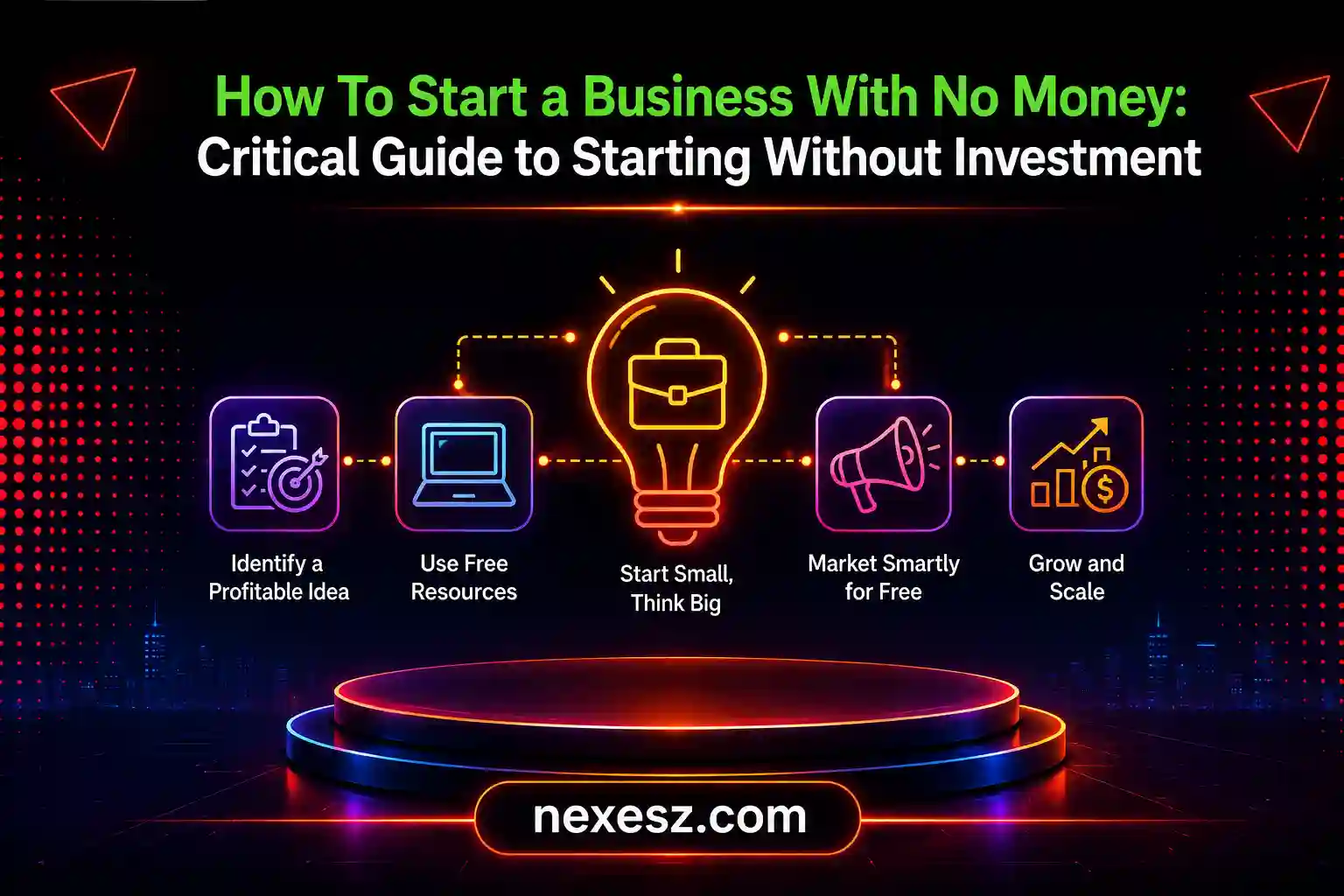
It is easier than ever to start an online business with no money. In 2026, about 45% of American adults already run a side business, and the global gig economy is worth roughly $674.1 billion. You do not need an office, inventory, or an ad budget. If you are a student, freelancer, or aspiring entrepreneur, you can turn your skills into a profitable online business with free tools and steady effort. This guide covers the steps, the numbers, and the mistakes to avoid.
Why Starting With No Money Actually Makes Sense
The biggest barrier isn’t talent; it’s the belief that you need money to begin. About 65% of entrepreneurs say they lack the cash to start, yet 34% of new businesses begin with under $5,000 and half launch from home. The side hustle data helps — the average side business now earns about $1,122 a month. If you want to start a business from home as a side income or full-time career, the gig economy has never been friendlier.
The proof is in the companies — Zoho, the Indian software firm used by 60 million people, was founded without a single dollar of outside funding. You do not need a miracle; you need a model.
Starting with little or no investment offers real advantages:
- Low financial risk — with free tools, you lose nothing but time if an idea does not work.
- Flexible schedule — you control your hours, making a side hustle realistic.
- Global audience — the internet lets you serve customers far beyond your city.
- Scalable growth — add services, products, or automation as revenue arrives.
- Proven odds — about 78.4% of new businesses survive their first year, with service businesses outlasting product ones.
Step-by-Step Guide to Start an Online Business
Use these seven practical steps to start an online business with no money. Each one costs nothing except your time.
Step One — Identify Your Skills
List the skills you already have. Writing, design, coding, teaching, marketing, photography, and consulting are all in demand online. The market rewards sharp skills: according to Upwork data, freelancers with AI skills command rates 40–56% higher than standard rates. You do not need to master a new field, only package an existing skill for the right customer.
Step Two — Choose a Profitable Niche
Focus on one specific problem instead of trying to serve everyone. Browse through online business ideas with no money — freelancing, digital products, content creation, online tutoring, affiliate marketing, and consulting all work — but pick the niche where your skill meets a problem people already pay to solve. A narrow niche helps you stand out, price with confidence, and attract the right audience. Before committing, think through what makes a business model work, so your niche connects to a clear way of earning.
Step Three — Validate Your Idea Before Building Anything
The number one reason small businesses fail is not competition or funding — it is that the market does not need the product or service, and that explains roughly a third of all failures. The data on digital products is blunt: 44% of them earn exactly zero, and almost every one is launched without an audience or validation. One founder tested wig demand on Instagram, sold 50 preorders in her first 60 days, and only then invested in stock. Talk to five to ten potential customers using the steps of market research for free — interviews, short surveys, and watching what competitors charge cost nothing.
Step Four — Understand Your Audience
Learn your customers’ goals, challenges, and buying habits. Join the Facebook groups where they hang out, read competitor reviews, and note the exact words they use. Those words become your headings, your messages, and your copy. Write down the top three frustrations you hear repeated. That list tells you what to sell first, what to price higher, and what to answer in your content.
Step Five — Build Your Online Presence for Free
A single-page site from Carrd or Google Sites costs nothing, and marketplaces like Fiverr, Upwork, Etsy, and LinkedIn can be your first storefront. Most people can start an online business with no money by selling services first, because a service needs no inventory. On Fiverr, a realistic first sale lands in 7–14 days; on Upwork, focused proposals usually win the first contract within 2–6 weeks. For day-to-day operations, a free stack covers everything — Canva (1.6 million free templates) for design, Google Workspace for email and documents, Notion or Trello for tasks, and Wave for invoicing. If you sell your time and expertise, study how a service-based business model works before you set your first price.
Step Six — Create Valuable Content
Share high-quality content that answers real questions — blog posts, tutorials, short videos, and social updates. Video deserves extra effort; it lifts conversion rates by about 49%. Publish where your audience already is, and make every piece solve one specific problem.
Step Seven — Promote Using Free Marketing Channels
Post your content on social media, answer questions in forums and communities, and make your best content easy to find in search engines. Consistency beats budget — 82% of freelancers reported more job opportunities in 2025 than the year before, and most built that pipeline with free channels and regular, helpful posts. If you also serve nearby customers, claim your free Google Business Profile so you appear in local maps and searches in your city.
How to Market Your Online Business
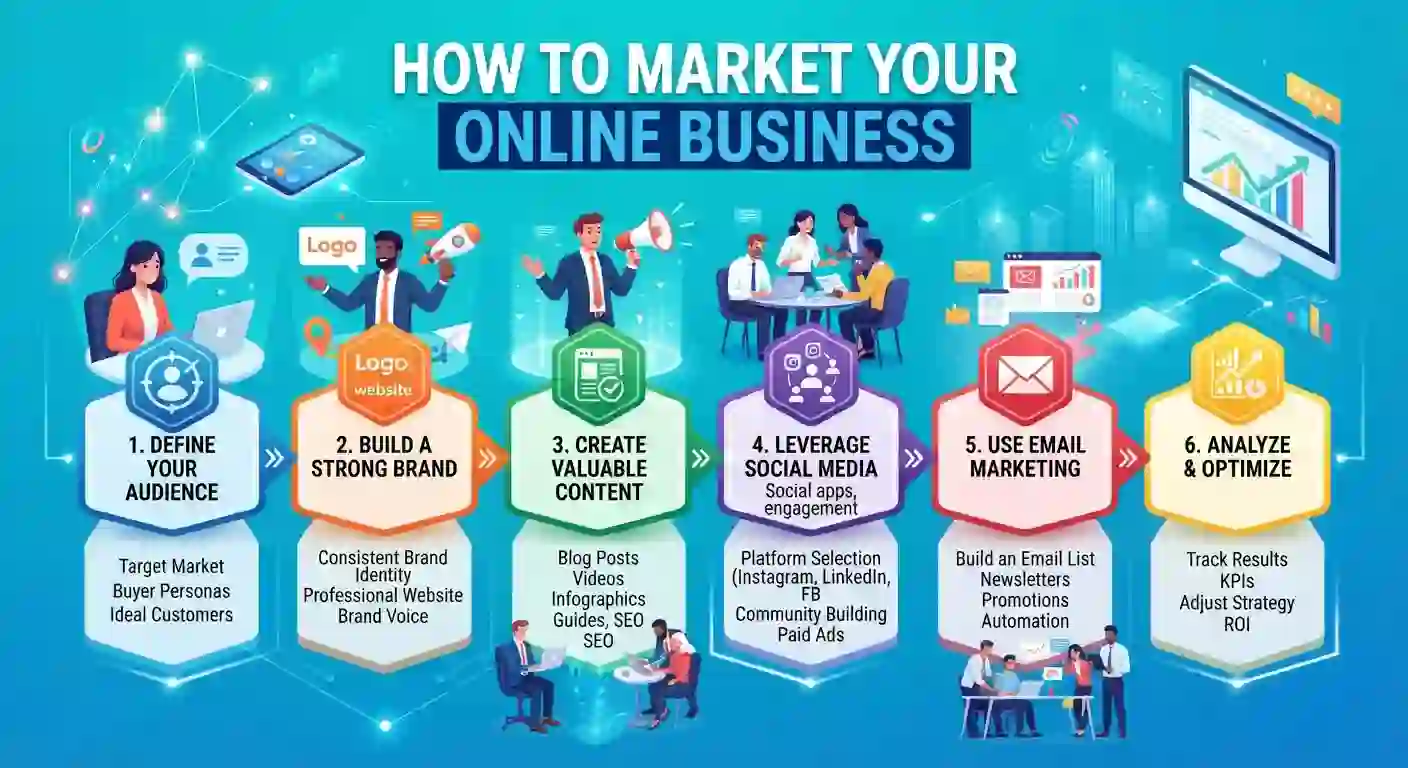
Even the best product will not sell if nobody knows it exists. Everyone who wants to start an online business with no money learns the same lesson first — distribution matters more than production. If your goal is to make money online without an ad budget, these channels work:
- Search engine optimization — slow but compounding, and free forever.
- Content marketing — one useful article can bring visitors for years.
- Email marketing — about $36 back for every $1 spent, with free plans like Brevo and MailerLite sending thousands of messages a month.
- Facebook groups and communities — where buying decisions actually happen.
- LinkedIn networking — the best free channel for service businesses.
- Pinterest and YouTube — long-tail traffic that keeps working after you publish.
Email deserves extra attention. It drives 42% of sales for digital product creators, and 59% of consumers say a marketing email has influenced a purchase. Every other channel is rented, but the list is yours.
Affiliate marketing is also a zero-cost way to earn while you build — a $19.4 billion channel driving about 16% of all ecommerce sales. Review products you genuinely use and let the commissions fund your next step.
Tips to Grow Your Online Business Faster
Building takes time, but the right habits compress it. The average freelancer or content creator needs three to twelve months to reach a comfortable income, so plan in months, not weeks:
- Publish useful content at least once a week.
- Optimize every page you publish for one search term.
- Start your email list from day one, not after you launch.
- Ask happy customers for written reviews and testimonials.
- Connect with other business owners in your niche and swap referrals.
- Watch Google Analytics to see what actually brings traffic.
- Improve based on customer feedback instead of guesses.
Once one service proves real demand, productize it. Many service businesses eventually move toward a subscription business model for recurring revenue, or evolve into a saas business model that delivers the same solution on autopilot. Atlassian followed exactly that path — started small, stayed profitable, and never needed outside money. Companies that do one thing well usually outgrow the ones that try everything at once.
Conclusion
You do not need a big budget to begin — just a real problem, a skill that solves it, and steady weekly action. Pick your niche, validate it for free, publish content that helps, and let search engines and communities bring the customers. Every large business you admire started with one skill, one audience, and one step. Start today with step one — listing your skills takes ten minutes, and it is the foundation of everything after.
Frequently Asked Questions
How can I start an online business with no money?
Pick a niche where you already have a skill, validate it with free interviews and surveys, sell your services on marketplaces, and promote with content and SEO.
What is the best online business to start without investment?
Freelancing, content creation, online tutoring, digital products, affiliate marketing, and print-on-demand are the strongest zero-cost options — they sell skills instead of inventory.
Do I need a website to start an online business?
No. Social media, freelance marketplaces, and selling platforms are enough to make your first sale. A free single-page site helps once you want credibility and your own audience.
How long does it take to make money from an online business?
Services can earn within one to four weeks on Fiverr and Upwork. Slower channels like blogging, SEO, and affiliate marketing usually need three to twelve months of consistent publishing before they pay.
What are the first steps to start an online business?
Identify your skills, choose a narrow niche, validate the idea for free, understand your audience, build a free online presence, and promote consistently through content and communities.
Leave a Reply